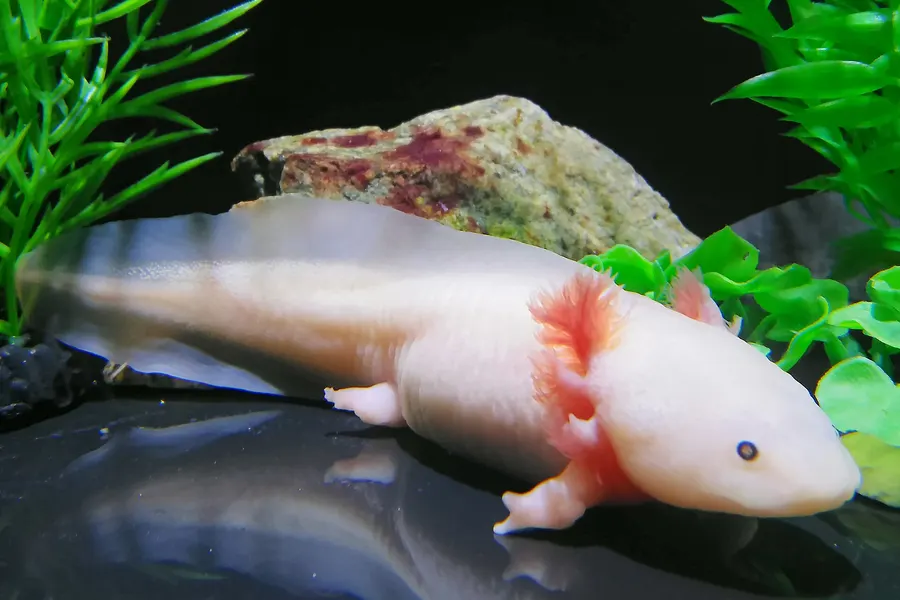
Axolotl water temperature: how to keep the tank cool
The right axolotl water temperature is 16–18 °C. How to keep a tank cool in a UK heatwave with fans, frozen bottles and chillers, and the warning signs to watch for.
Axolotls are cold-water amphibians. Vets recommend 16–18 °C and say water should never exceed 24 °C. Below that range they cope fine, they're just slower. Above it, things go wrong quickly.
| Water temperature | What it means | Do this |
|---|---|---|
| 10–15 °C | Safe, slower and eating less | Nothing. No heater. |
| 16–18 °C | Ideal | Keep it there |
| 19–20 °C | Warm but OK short-term | Watch the forecast, get a fan ready |
| 21–23 °C | Stress building | Fan on, frozen bottles, feed less |
| 24 °C + | Dangerous | Cool today, watch closely, call a vet if signs appear |
Not sure where you are? Use the temperature check.
Why warm water hurts
Warm water holds less oxygen while the axolotl's body speeds up and needs more. Waste breaks down into ammonia faster. Their immune system struggles, so fungus and infections take hold. A few warm days rarely kill a healthy axolotl. A warm month often does.
How to cool a tank, from free to permanent
- Move it. If it's in a sunny room, find a cooler one before summer. The best fix is the free one.
- Block the sun. Close curtains or blinds on hot afternoons. Turn off any tank light.
- Fan across the water. A clip-on aquarium fan blowing over the surface cools by evaporation, often 2–4 °C. Top up with conditioned water as it evaporates.
- Frozen bottles. Freeze plastic bottles of dechlorinated water. Float one in the tank and swap before it thaws. Go slowly: big swings are stressful too.
- Lower the room temperature. Close windows in the day, open them at night.
- Chiller. If your water passes 20 °C every summer, an aquarium chiller holds it steady. It's the most expensive option and the only one that works while you're on holiday.
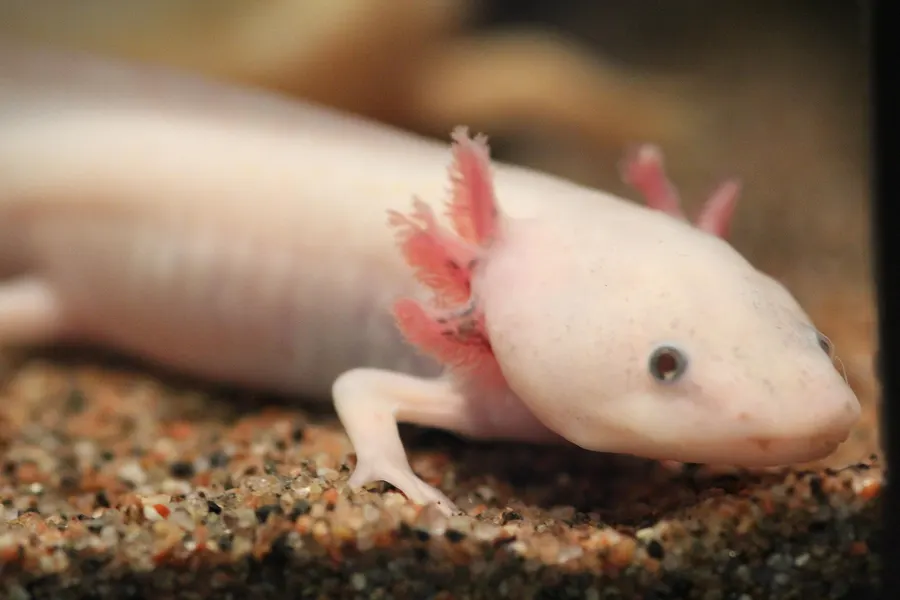
Warning signs
- Gill tips curling forward
- Not eating
- Floating or gulping air at the surface a lot
- Pale, slimy or fluffy white patches on the skin
If you see fluffy white patches, open wounds or the axolotl stays floating, call a vet who sees exotics. Lower the temperature, but don't add salt or fish medicines without advice.
Quick answers
What temperature is too hot for an axolotl?
Stress starts above about 20 °C and over 24 °C is dangerous. At those temperatures they eat less, are more prone to fungus and can die.
Can I put ice in the tank?
Not loose ice cubes from tap water. Use sealed plastic bottles of frozen dechlorinated water and swap them before they fully melt. Drop the temperature slowly, no more than about 2 °C an hour.
Do axolotls need a heater in winter?
No. Cooler water down to around 10 °C is fine. They just slow down and eat less.
Checked November 2026. General information, not veterinary advice.