Axolotl care: the UK guide
How to look after an axolotl in the UK: tank size, cool water, cycling, feeding, health signs and the mistakes that make axolotls ill.
- Water
- 16–18 °C, never above 24 °C
- Tank
- 75 litres+, floor 90 × 45 cm for one adult
- pH
- About 7.4–7.6
- Food
- Earthworms and sinking pellets
- Adult size
- Usually 20–25 cm, up to 30 cm
- Lifespan
- 10–15 years
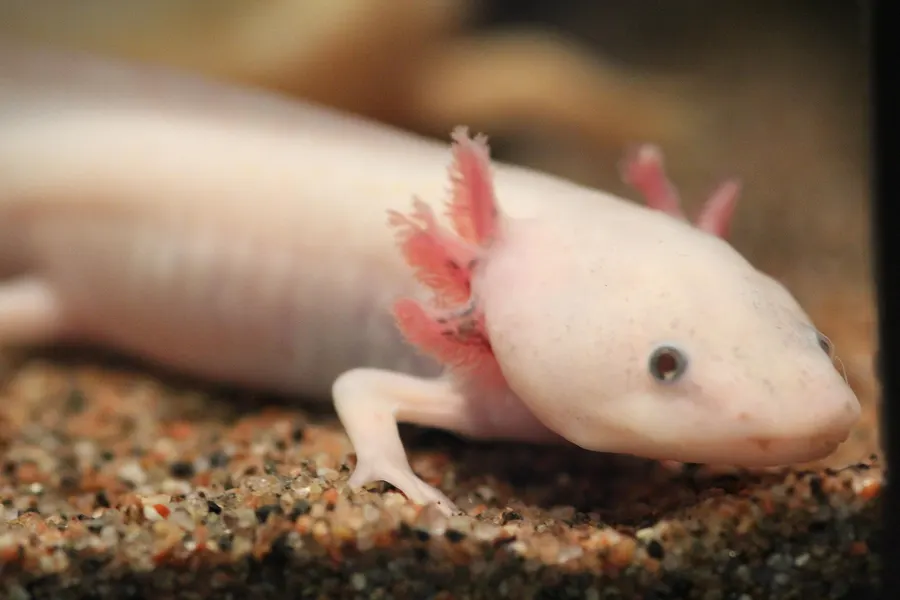
Axolotls come from the cold lakes around Mexico City, where they're now critically endangered in the wild. The ones sold as pets are bred in captivity, and they've kept their wild needs: cool, still, clean water and somewhere dark to hide.
The daily routine
- Glance at the thermometer. This takes two seconds and catches most problems early.
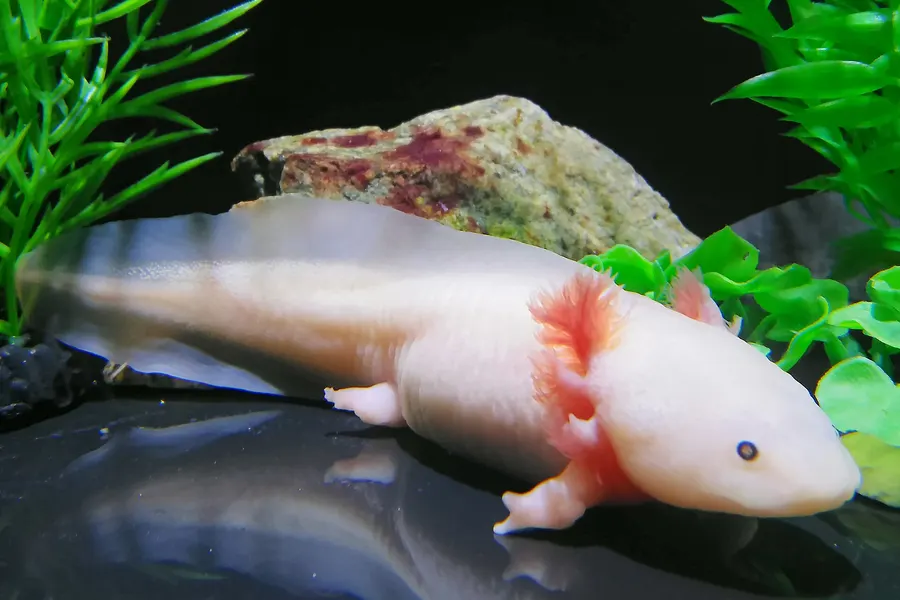
- Check they look normal: gills fanned out to the sides, resting on the floor, interested in food.
- Remove any uneaten food or waste you can see. A turkey baster is ideal.
Every week
- Change 20–30% of the water with conditioned tap water at roughly the same temperature.
- Test ammonia, nitrite and nitrate. Ammonia and nitrite should read 0. If nitrate climbs past about 40 ppm, change more water.
- Squeeze the sponge filter in the water you've taken out, never under the tap: tap water kills the bacteria that keep the tank safe.
Feeding
Adults eat every two to three days, young axolotls daily. Earthworms are the best staple, with sinking pellets as the backup. See what to feed an axolotl for amounts.
Signs something is wrong
| What you see | Likely cause | What to do |
|---|---|---|
| Gill tips curled forward | Water too warm, too much flow or poor water quality | Check temperature and test the water. Calm the filter. |
| Floating, can't stay down | Swallowed air, constipation or stress | Check temperature. If it lasts more than a day or two, see a vet. |
| White fluffy patches | Fungus, usually after stress or warm water | Call an exotic vet. Don't use fish medicines without advice. |
| Off food for over a week | Warm water, poor water or illness | Test water and temperature, then call a vet. |
Most fish medicines and salt treatments are not safe for axolotls without a vet's guidance. Find a vet who sees exotics before you need one.
The mistakes we see most
- Buying the axolotl before the tank has cycled. Ammonia builds up within days and burns the gills.
- A tank in a sunny room or by a radiator. Fine in March, dangerous in July.
- Gravel. Axolotls swallow it while feeding and it can block their gut.
- Tank mates. Fish nibble gills, smaller axolotls lose legs.
- Too much flow. If the gills are pushed forward, the filter is too strong.
Ready to build one? Start with how to set up an axolotl tank and the checklist.
Quick answers
Are axolotls good for beginners?
Yes, if you can keep the water cool and clean. They don't need handling, heat lamps or special lighting. They do need patience at the start while the tank cycles.
Can you handle an axolotl?
Avoid it. Their skin is soft and has a protective slime layer. If you must move one, use a soft net or a clean container.
Do axolotls need light?
No special light. Normal room daylight is enough. If you use a tank light for plants, keep it dim and give them shade.
Checked November 2026. General information, not veterinary advice.